ASTM D698 and ASTM D1557 define the standard for compaction control across the United States, but in Savannah, the local geology adds a layer of complexity that generic lab reports often miss. The city sits on Pleistocene and Holocene deposits of the Atlantic Coastal Plain, where clean sands, silty sands, and fat clays can alternate within a single project site. When we run a Proctor test on material from Pooler or the marsh-edge developments near the Savannah River, the moisture-density curve doesn't just tell you a number—it reveals how the soil will respond to the humidity cycles and high water table that define construction in Chatham County. Before a contractor places fill for a warehouse pad off Jimmy DeLoach Parkway or compacts subgrade for a runway expansion at Savannah/Hilton Head International, knowing the maximum dry density and optimum moisture content is non-negotiable. We typically pair the sand cone density test with the laboratory Proctor to verify field compaction reaches at least 95% of the standard maximum, and for deeper strata characterization, the SPT drilling program provides the samples we use to select representative material for the moisture-density relationship.
A one percent deviation from optimum moisture in Savannah's silty sands can drop the field dry density by three to five pounds per cubic foot—and that difference shows up in differential settlement within the first two wet seasons.
Method and coverage
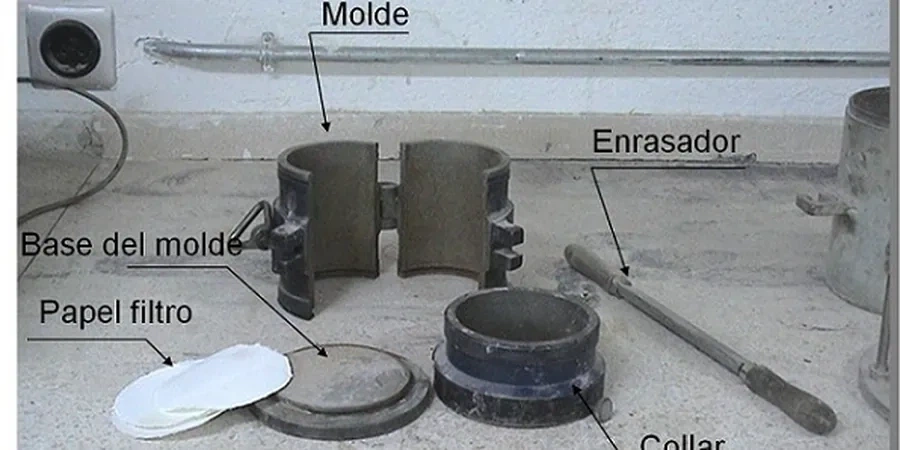
- Mold size selection follows AASHTO T-99 or T-180 based on percent retained on No. 4 sieve.
- Moisture content is determined by oven-drying at 110±5°C per ASTM D2216, with at least four points defining the compaction curve.
- For soils with more than 30% retained on the 3/4-inch sieve, we apply the rock correction procedure per ASTM D4718.
- Zero air voids curve is plotted on every report to validate the saturation line at the specific gravity measured per ASTM D854.
Regional considerations
The most common mistake we see contractors make in Savannah is assuming that the borrow pit material from one source will match the Proctor curve generated for a different lift or a different area of the site. The Pleistocene terraces that run through the city can shift from a clean SP sand to a plastic SC clay within a hundred lateral feet. If the field density technician runs a nuclear gauge test against a Proctor that doesn't represent the material being compacted, the percent compaction reported is meaningless—and the engineer of record may sign off on fill that will settle unevenly under the first sustained rainfall. Another frequent error is failing to adjust the compaction specification when the natural moisture content is well above optimum. In the low-lying areas south of DeRenne Avenue, where the water table sits at three feet below grade, we often recommend laboratory moisture conditioning trials and a specification that allows for a reduced compactive effort on the first lift placed over the natural subgrade, rather than forcing a standard that cannot be achieved without lime treatment or extended drying.
Standards that apply
ASTM D698-12(2021) Standard Test Methods for Laboratory Compaction Characteristics of Soil Using Standard Effort, ASTM D1557-12(2021) Standard Test Methods for Laboratory Compaction Characteristics of Soil Using Modified Effort, ASTM D4718-87(2007) Standard Practice for Correction of Unit Weight and Water Content for Soils Containing Oversize Particles, ASTM D2216-19 Standard Test Methods for Laboratory Determination of Water (Moisture) Content of Soil and Rock by Mass, AASHTO T 99-22 and AASHTO T 180-22 (Georgia DOT specifications for roadway embankment)
Complementary services
Standard and Modified Proctor Testing
We prepare compaction curves for both compactive efforts using representative bulk samples of fill soil or subgrade material from your Savannah project. Each report includes the zero air voids curve, optimum moisture content, maximum dry density at 100% saturation, and rock correction when applicable. Turnaround is typically 24 to 48 hours after sample receipt.
Field Density Correlation and Material Verification
When a nuclear gauge reading fails to meet specification, we run a one-point Proctor verification or a full curve on the failing material to confirm whether the reference Proctor is valid. We also perform Atterberg limits and grain size analysis on the same sample to identify changes in the borrow source that may require a new compaction specification.
Typical parameters
Q&A
What is the typical cost for a Standard Proctor test on a Savannah project?
For a standard Proctor (ASTM D698) on a single soil sample, the cost ranges from US$100 to US$140 depending on whether rock correction is required. A Modified Proctor (ASTM D1557) runs US$140 to US$190 per sample. Volume pricing applies when we run multiple curves for the same project—common on large site development jobs where borrow sources change.
How do I know whether to specify the Standard or Modified Proctor for my fill?
The choice depends on the structural load and the project specifications. In Savannah, the Standard Proctor (12,400 ft-lbf/ft³) is typical for residential slabs, landscaping fills, and utility trench backfill where the load is light. The Modified Proctor (56,000 ft-lbf/ft³) applies to structural fill beneath foundations, bridge approach embankments, and heavy industrial floors—anywhere the geotechnical report specifies a higher density to limit settlement under sustained load.
How much material do you need to run a Proctor test?
We require approximately 45 to 50 pounds of representative soil for a Standard Proctor and about 65 to 70 pounds for a Modified Proctor, especially if the material contains gravel and requires rock correction. The sample should be sealed in a plastic bag immediately after excavation to preserve the natural moisture content, and we recommend taking it from the same lift and source as the fill being placed.
Can you run a Proctor on soil that already has lime or cement mixed in?
Yes, we routinely test chemically stabilized soils. The procedure follows ASTM D558 for soil-cement or ASTM D3551 for lime-treated soils, and the compaction curve is time-sensitive because the hydration reaction begins immediately. We coordinate with the contractor to receive the sample within the working window specified by the mix design, and we report the maximum dry density and optimum moisture content for the stabilized mix at the specified curing time.