ASTM D4318 is the foundation of fine-grained soil classification, and in Savannah, it’s not optional—it’s essential. The city sits on the Atlantic Coastal Plain, where marine and fluvial deposits create layers of silt and clay that behave very differently under load. A soil you’d call ‘firm’ in the morning can turn plastic by afternoon if the moisture content shifts. Our lab runs Atterberg limits on every sample from the Savannah metro, from Pooler to the islands. We’ve seen liquid limits swing from 35 to over 80 within a single boring on Bay Street. Without a precise grain size analysis paired with the plasticity data, you’re guessing on bearing capacity. And guessing in Savannah’s high water table zones leads to differential settlement that shows up fast in the humid subtropical climate.
In Savannah, the plasticity index isn't just a number—it's your first warning about shrink-swell potential in the city's marine clay layers.
Process and scope
Local ground factors
Near the Savannah River, where soft clay extends 40 feet deep, an error in Atterberg limits can cause significant structural issues for mat foundation designs. In our humidity-controlled lab just off I-16, we use a Casagrande cup on a calibrated granite base to guarantee a precise 10 mm drop with no wobble or drift. Why is such accuracy crucial? A three-point error in the liquid limit can shift the USCS classification from CL to CH, altering the allowable bearing pressure by hundreds of pounds per square foot. We've encountered reports from other labs where the plastic limit was determined hastily—threads rolled too quickly and too thick—rendering the plasticity index useless. To avoid these pitfalls, our technicians perform duplicate tests on every sample; a discrepancy exceeding 5% in liquid limit values triggers a third test. No shortcuts are taken. Additionally, our equipment is verified weekly using reference soil samples from the Georgia Tech geotechnical program.
Video overview
Reference standards
Our procedures adhere strictly to the following standards: ASTM D4318-17 for liquid limit, plastic limit, and plasticity index; ASTM D2487-17 for USCS classification; AASHTO T 89-22 for liquid limit determination; AASHTO T 90-22 for plastic limit and plasticity index; and IBC 2021 Chapter 18 for soils and foundations.
Other technical services
Liquid Limit Determination
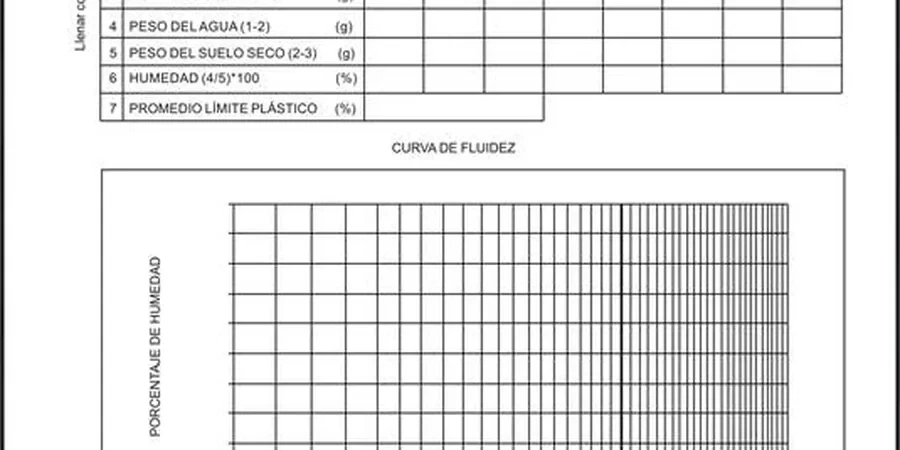
For liquid limit determination, we employ the multi-point Casagrande cup method in accordance with ASTM D4318. Flow curves are plotted using four data points collected between 15 and 35 blows to ensure precision.
Plastic Limit & Plasticity Index
Our experienced technicians use the hand-rolled thread method for plastic limit. The plasticity index is reported to the nearest whole number, and classification follows the USCS.
One-Point Liquid Limit
For projects with tight timelines that do not require a full flow curve, we offer a one-point liquid limit test. This method is validated monthly against our multi-point results.
Full Atterberg Package with Grain Size
We offer a combined analysis that includes liquid limit, plastic limit, plasticity index, and sieve/hydrometer testing. This yields a complete USCS classification and a comprehensive soil behavior assessment in a single report.
Typical parameters
Q&A
How much does Atterberg limits testing cost in Savannah?
For routine projects in the Savannah area, a standard Atterberg limits test (liquid limit and plastic limit) typically costs between US$60 and US$110 per sample. The final price depends on the number of samples and whether expedited processing is requested. Once we review your project scope, we can provide a firm quotation.
What's the difference between liquid limit and plastic limit?
The water content at which soil transitions from a plastic to a liquid state is the liquid limit, measured with the Casagrande cup by counting the blows needed to close a standard groove. The plastic limit is the water content where soil crumbles when rolled into 3 mm threads. Their difference—the plasticity index—indicates the soil's sensitivity to moisture changes. In Savannah's marine clays, a high PI signals significant shrink-swell potential.
How long does it take to get Atterberg limits results in Savannah?
Our standard turnaround from sample receipt is 2 to 3 business days. For time-sensitive projects, such as active excavations in downtown Savannah where the contractor needs immediate classification data, we can expedite results within 24 hours. The soil must be oven-dried and sieved before testing, which adds several hours regardless of priority.