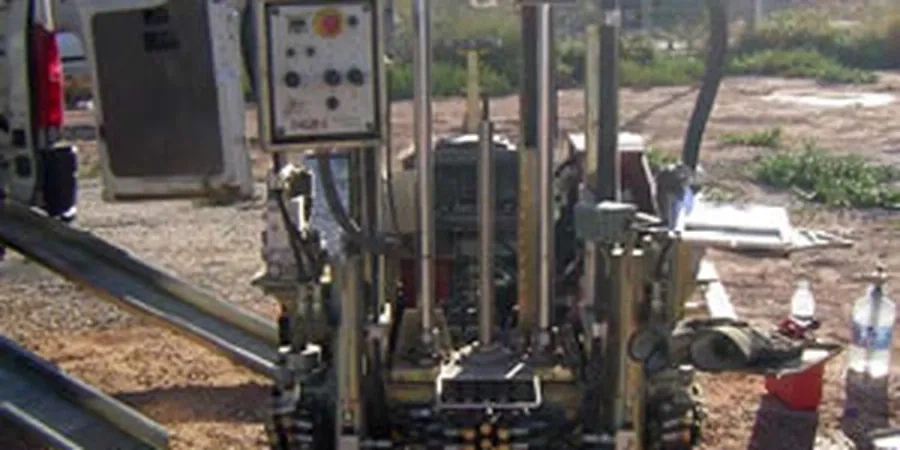
Savannah’s subsurface doesn't hide its secrets easily. The upper 30 to 50 feet are dominated by Pleistocene and Holocene deposits—interbedded loose sands, soft to medium clays, and occasional organics that shift behavior with the tide and the seasons. A standard boring with SPT sampling gives you a data point every 2.5 or 5 feet; CPT soundings give you a near-continuous profile of tip resistance, sleeve friction, and pore pressure, which makes a real difference when you’re trying to separate a thin silt seam from a true clay layer. We run our cone rigs in Savannah’s historic districts, port-adjacent industrial lots, and new residential subdivisions, always with an eye on the shallow groundwater that sits barely 4 to 8 feet below grade across much of Chatham County. Where the stratigraphy is complex, we often pair the cone data with a few targeted SPT borings to calibrate soil behavior types and confirm the Robertson chart classifications on samples we can see and touch.
A single CPT sounding in Savannah’s coastal deposits can replace four to six SPT borings for stratigraphic profiling—and it does it in half a day instead of two.
Process and scope
Local ground factors
In Savannah, Georgia, we tackled a five-story mixed-use development on reclaimed land adjacent to the Savannah River, where a previously undetected infilled tidal creek cut diagonally across the lot—a feature the geophysical survey had missed. Initial SPT borings at 60-foot intervals returned N-values between 15 and 25, which seemed adequate for shallow footings. However, the CPT profile revealed a 12-foot-thick layer of soft, normally consolidated silty clay with tip resistances under 0.3 MPa and pronounced excess pore pressure generation with each push. That soft lens posed a serious consolidation risk; had the structural engineer stuck with the original foundation plan, differential settlement would have likely caused slab cracking within two years. We conducted five additional CPT soundings on a 20-foot grid, delineated the paleochannel boundaries, and the design team pivoted to a ground improvement approach using rigid inclusions to bridge the weak zone. In this area, where relic channels and buried marsh deposits hide beneath seemingly clean sand, omitting cone data is a gamble best avoided.
Reference standards
Relevant standards and procedures include ASTM D5778-21 for electronic friction cone and piezocone testing, IBC 2024 Chapter 18 covering soils and foundations with liquefaction evaluation, ASCE 7-22 for minimum design loads, Robertson's 2016 CPT soil behavior type classification, and the NCEER/NSF liquefaction triggering methods (Youd & Idriss 2001) for both SPT and CPT data.
Other technical services
Piezocone (CPTu) Soundings
For cone penetration, we employ a standard cone equipped with pore pressure measurement at the shoulder. Depending on soil stiffness and required depth, we use either 15 cm² or 10 cm² cones.
Pore Pressure Dissipation Testing
Dissipation tests are performed by stopping cone advancement to record u2 decay over time. From these, we derive t50 values and complete decay curves to estimate consolidation rates in compressible clays.
Seismic CPT (SCPT)
Shear wave velocity is measured downhole and integrated with cone data, providing direct Vs profiles for site class determination as per ASCE 7-22.
Soil Behavior Type Profiling & Reporting
We deliver comprehensive digital logs that include Robertson SBT classification, equivalent SPT N60 estimates, and interpreted geotechnical units ready for foundation design.
Typical parameters
Q&A
How much does a CPT sounding cost in Savannah?
In the Savannah region, costs for standard CPTu soundings generally fall between US$180 and US$250 per meter, influenced by total depth, site accessibility, and inclusion of seismic or dissipation testing. After reviewing your site and project needs, we provide a fixed-price quotation.
What depth can you reach with the CPT rig in coastal Georgia soils?
Our 20-ton truck-mounted rig typically achieves depths of 100 to 130 feet in the sands and clays common to Chatham County. In the denser, pre-consolidated sands of the deeper Hawthorn Formation, refusal may occur sooner—we continuously monitor sleeve friction and tip resistance, halting penetration when capacity limits are reached to safeguard the cone and rods.
Can CPT data be used for liquefaction analysis under IBC?
Yes, both IBC Chapter 18 and ASCE 7-22 recognize CPT-based liquefaction triggering procedures. We analyze cone data using the NCEER/NSF framework (Youd & Idriss 2001, with Idriss & Boulanger 2008 updates), employing normalized tip resistance and soil behavior type to compute factor of safety against liquefaction at every depth increment.
Do CPT results replace the need for soil borings and lab testing?
While CPT provides continuous stratigraphic detail unmatched by borings, it does not retrieve physical samples. For Savannah projects that require Atterberg limits, grain size distribution, or strength testing, we suggest a hybrid approach: use CPT for profiling and liquefaction assessment, complemented by a select number of targeted SPT borings or thin-wall Shelby tube samples for laboratory verification.